Learning to Frame a Landscape Without Rushing
A slower photography practice for finding structure, scale and light before pressing the shutter.
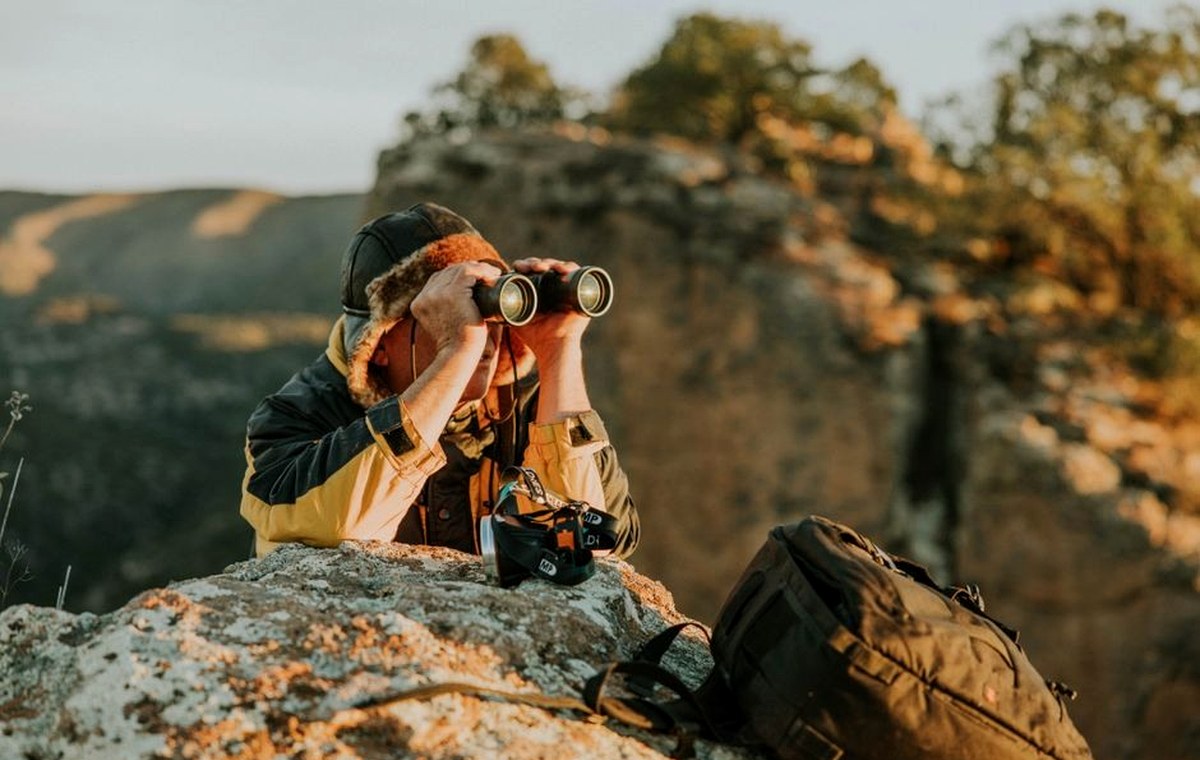
A landscape can be spectacular and still make a flat photograph. The difficulty is rarely a lack of scenery. More often, it is the speed with which we decide what the picture is supposed to be. We arrive, see the obvious view, raise the camera, and move on before the place has had time to reveal its structure.
A slower approach starts by postponing the first photograph. Stand still for a minute. Look for the lines that organize the scene: a ridge, a path, the edge of a shadow, a band of bright sky. Notice which element feels closest and which one carries the eye into the distance. Those relationships are the raw material of the frame.
Use one anchor
Wide views become easier to compose when one object gives the eye somewhere to begin. It might be a boulder, a fence post, a person on a trail, or a patch of sun on the ground. The anchor does not need to dominate the photograph. It simply gives scale and creates a starting point before the gaze moves toward the horizon.
Walk a few steps left and right before changing lenses. Small shifts can separate overlapping hills, move a distracting branch out of the frame, or let a path enter from a more useful angle. Many landscape photographs improve more through position than magnification.
Watch the empty parts
It is easy to concentrate on mountains, trees and buildings while ignoring the spaces between them. Sky, open water and plain ground are not leftovers. They control the balance of the photograph. If half the frame is sky, ask whether the sky is doing enough work to deserve that much space. If it is blank and pale, lowering the camera may make the scene feel stronger.
The same applies to foreground. A large area of featureless grass can make a photograph feel distant. Moving closer to texture — stones, heather, leaves, worn timber — can create a more convincing sense of being there.
Let light decide the moment
When the composition is settled, wait for light rather than taking ten nearly identical frames. A passing cloud can separate one slope from another. A brighter patch can briefly draw attention to the path you want the viewer to follow. On windy days, a few seconds of stillness may be enough to keep grasses or branches from blurring.
This kind of waiting changes the experience of photographing. The camera becomes less of a collecting device and more of a reason to look carefully. You may return with fewer pictures, but the ones you keep will usually contain more of what made the place interesting in the first place.
Finish with a second frame
Before leaving, make one photograph that is deliberately different from your first idea. Turn around. Move closer. Photograph a detail instead of the view, or make a vertical frame after working horizontally. The exercise prevents a location from becoming a single postcard image in your mind.
Good landscape photography is not a race to capture everything. It is a practice of choosing: this line, this light, this relationship between near and far. Slowing down simply gives those choices time to become visible.